allImages = [
  "IMG_3918.jpeg", "IMG_3919.jpeg", "IMG_3920.jpeg", "IMG_3921.jpeg", "IMG_3922.jpeg",
  "IMG_3924.jpeg", "IMG_3925.jpeg", "IMG_3944.jpeg", "IMG_3946.jpeg", "IMG_3947.jpeg",
  "IMG_3948.jpeg", "IMG_3949.jpeg", "IMG_3950.jpeg", "IMG_3951.jpeg", "IMG_3953.jpeg",
  "IMG_3955.jpeg", "IMG_3957.jpeg", "IMG_3958.jpeg", "IMG_3959.jpeg", "IMG_3960.jpeg",
  "IMG_3962.jpeg", "IMG_3963.jpeg", "IMG_3964.jpeg", "IMG_3965.jpeg", "IMG_3968.jpeg",
  "IMG_3970.jpeg", "IMG_3972.jpeg", "IMG_3975.jpeg", "IMG_3976.jpeg", "IMG_3977.jpeg",
  "IMG_3978.jpeg", "IMG_3979.jpeg", "IMG_3980.jpeg", "IMG_3981.jpeg", "IMG_3982.jpeg",
  "IMG_3983.jpeg", "IMG_3985.jpeg", "IMG_3986.jpeg", "IMG_3987.jpeg", "IMG_3988.jpeg",
  "IMG_3989.jpeg", "IMG_3991.jpeg", "IMG_8700.jpeg", "IMG_8702.jpeg", "IMG_8704.jpeg",
  "IMG_8707.jpeg"
]

// Shuffle and pick 3
selectedImages = {
  const shuffled = [...allImages].sort(() => 0.5 - Math.random());
  return shuffled.slice(0, 3);
}

// Render the gallery
html`<div class="gallery-grid">
  ${selectedImages.map(img => `
    <div class="gallery-item">
      <img src="figures/gecco_ecip_2025/${img}" class="gallery-img" loading="lazy">
    </div>
  `).join('')}
</div>`ECiP Speakers & Talks: 2002 - 2025
Evolutionary Computation in Practice (ECiP)
The Evolutionary Computation in Practice (ECiP) track at GECCO has functioned for over fifteen years as a specialized forum for bridging the gap between theoretical innovation and industrial application. While broader academic tracks prioritize peer-reviewed proofs, ECiP focuses on the operational complexities of real-world optimization. It brings together experts who manage corporations, lead large-scale industrial projects, and navigate the intricate landscape of academia-industry partnerships to share high-level insights that extend beyond textbook methodologies.
2025 Málaga, Spain
The 2025 program highlights the relationship between academic foundations and industrial relevance, exploring why certain simpler strategies often outperform complex methods in practice.
Evolutionary Computation Track Chairs:
- Thomas Bartz-Beielstein, IDE+A, TH Köln, Germany
- Richard Schulz, IDE+A, TH Köln, Germany
Speakers & Talks
 Dr. Roman Kalkreuth RWTH Aachen, Germany
On the antagonism between foundations and applications in graph-based genetic programming
 Dr. Farha Anjum Khan Continental-Corporation
Robust Contextual Preferential Bayesian Optimization for Real-World Applications with Biased Data
 Dr. Xavier Bonet-Monroig Honda Research Institute Europe
Quantum (computing) needs you! Quantum (computing) wants you!
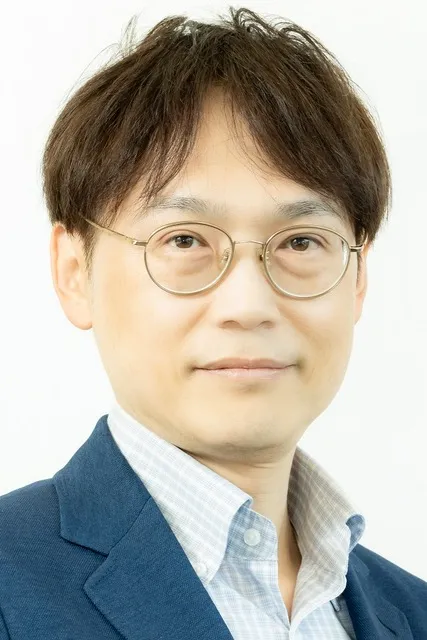 Hirotaka Kaji Frontier Research Center, Toyota Motor Corporation
Application of Quantum Annealing to Optimize Parts Storage Arrangement in a Logistics Center
Impressions from GECCO ECiP 2025
2024: Melbourne, Australia

The 2024 track emphasized evolutionary computation in the energy domain, particularly focusing on PV systems and dynamic optimization.
Evolutionatry Computation Track Chairs:
- Thomas Bartz-Beielstein, IDE+A, TH Köln, Germany
- Richard Schulz, IDE+A, TH Köln, Germany
- Danial Yazdani, University of Technology Sydney, Australia
The Randomised Optimisation Algorithms Research Network: Objectives and Opportunities Carlos M. Fonseca, Bogdan Filipiˇc Six million compute minutes solving billion dollar problems – a successful GA deployed industrially Simon Ratcliffe Automated Machine Learning Steffen Limmer Simplifying Hyperparameter Tuning for Industrial Applications with spotPython: Examples from PyTorch, Scikit-Learn, and River Thomas Bartz-Beielstein
Speakers & Talks
 Carlos M. Fonseca and Bogdan Filipi Polytechnic of Porto, Portugal and Jožef Stefan Institute, Slovenia
The Randomised Optimisation Algorithms Research Network: Objectives and Opportunities
 Steffen Limmer Siemens AG, Germany
Automated Machine Learning
 Simon Ratcliffe School of Computer and Mathematical Sciences, The University of Adelaide
Six million compute minutes solving billion dollar problems - a successful GA deployed industrially
 Thomas Bartz-Beielstein THK-AI Research Cluster, TH Köln, Germany
Simplifying Hyperparameter Tuning for Industrial Applications with spotPython: Examples from PyTorch, Scikit-Learn, and River
2023 Lisbon, Portugal

2022 Boston (hybrid)

Evolutionary Computation Track Chairs:
- Thomas Bartz-Beielstein, TH Köln
- Bogdan Filipic, Jožef Stefan Institute
Speakers & Talks
 Giovanni Iacca University of Trento, Italy
Soft skills and soft computing: when presenting the solutions of an optimization problem becomes harder than finding them
 Jamal Toutouh Massachusetts Inst. of Technology, University of Málaga
Evolutionary Algorithms Supported Decision Making for Sustainable Cities
 Jörg Stork TH Köln, Germany
Jumping in at the deep end: from university to industry
 Eike Permin and Lina Castillo TH Köln, Germany
Consider the lathe – Why manufacturing provides an interesting playground for algorithms
2021 Lille, France

Evolutionary Computation Track Chairs:
- Thomas Bartz-Beielstein, TH Köln, Germany
- Bogdan Filipic, Jožef Stefan Institute, Slovenia
- Sowmya Chandrasekaran, TH Köln, Germany
2020 Cancun, Mexico

No Evolutionary Computation Track, but Industrial Challenge
Organizers:
- Frederik Rehbach, TH Köln, Germany
- Thomas Bartz-Beielstein, TH Köln, Germany
The industrial challenge is posed in cooperation with an industry partner of the institute. This year’s competition partially relies on a test suite that provides expensive computer simulation-based optimization problems and provides an easy evaluation interface that will be used for the setup of our challenge. Our industry partner is willing to publish one of their CFD simulations - the optimization of a gas distribution system (GDS) in a large-scale electrostatic precipitator - as a public challenge. The task in the first track is to find an optimal configuration for the gas distribution system.
2019 Prague, Czech Republic

Evolutionary Computation Track Chairs:
- Thomas Bartz-Beielstein, TH Köln, Germany
- Bogdan Filipic, Jozef Stefan Institute, Slovenia
- Jörg Stork, TH Köln, Germany
- Erik Goodman, Michigan State University, USA
2018 Kyoto, Japan

Evolutionary Computation Track Chairs:
- Thomas Bartz-Beielstein, TH Köln, Germany
- Bogdan Filipic, Jozef Stefan Institute, Slovenia
- Shigeru Obayashi, Tohoku University, Japan
Impressions from GECCO ECiP 2018 (Kyoto, Japan)
2017 Berlin, Germany
Track Chairs:
- Anna Esparcia Alcazar
- Thomas Bartz-Beielstein
- Jörn Mehnen
More: http://gecco-2017.sigevo.org/index.html/EC%2bin%2bPractice.html
2016 Denver, USA
Track Chairs:
- Anna Esparcia Alcazar
- Thomas Bartz-Beielstein
- Erik Goodman
More: http://gecco-2016.sigevo.org/index.html/EC%2bin%2bPractice.html
Speakers & Talks
Thomas Bartz-Beielstein TH Köln, Germany
Surrogate Model-based Optimization in Practice
Maizura Mokhtar, Ian Hunt, Stephen Burns and Dave Ross University of Melbourne, Australia
Optimising a Waste Heat Recovery System using Multi-Objective Evolutionary Algorithm
 Erik Hemberg, Ignacio Arnaldo and Una-May O’Reilly MIT, USA
Multi-Line Batch Scheduling by Similarity
Abdel-Rahman Hedar, Majid Almaraashi and Alaa Abdel-Hakim King Fahd University of Petroleum and Minerals, Saudi Arabia
Granular-Based Dimension Reduction for Solar Radiation Prediction Using Adaptive Memory Programming
Silvino Fernández, Pablo Valledor, Diego Díaz, Eneko Malatsetxebarria and Miguel Iglesias ArcelorMittal, Spain
Criticality of Response Time in the usage of Metaheuristics in Industry
Silvino Fernández, Pablo Valledor ArcelorMittal, Spain
System demonstration, ArcelorMittal Scheduling and Tuning suite
 Carlos A. Coello Coello CINVESTAV-IPN, Mexico
Evolutionary Multi-Objective Optimization in Real-World Applications
 Anna Esparcia Alcazar University of Manchester, UK
EC in industry: the quest for the Holy Grail – from Brain Computer Interfaces to automated testing with TESTAR
 Michael Affenzeller University of Applied Sciences Upper Austria, Austria
Heuristic Optimization in Production and Logistics
 Thomas Bäck Leiden University/divis, Germany
Industrial Challenge: Online Event Detection
 Felipe Campelo University of Adelaide, Australia
EAs for aeronautical optimization – some results and challenges
 Erik Goodman Michigan State University, USA
How to Introduce Academic-developed EC Technology to Industry
Anna Esparcia Alcazar, Thomas Bäck, Thomas Bartz-Beielstein, Felipe Campelo, Silvino Fernández, Erik Goodman, Thomas Stützle Panel Discussion
Panel Discussion
2015 Madrid, Spain

Track Chairs:
- Thomas Bartz-Beielstein, TH Köln, Germany
- Jörn Mehnen, Cranfield University, UK
Speakers & Talks
 Jörn Mehnen, Thomas Bartz-Beielstein, Anna Esparcia Alcazar, Erik Goodman Cranfield University, UK
Getting a job. What to do and what not to do
Erik Goodman Michigan State University, USA
Red Cedar Technology
Carlos Coello CINVESTAV-IPN, Mexico
Evolutionary Multi-Objective Optimization in Real-World Applications
 Emilia Tantar
Programmable Communication Networks
Jörn Mehnen Cranfield University, UK
Multi-objective real-time optimisation for machine tools
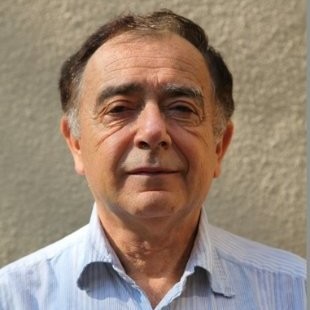 Arthur Kordon
New Challenges in Applying EC in Industry
Anna Esparcia Alcazar University of Manchester, UK
Past difficulties and new hopes to link EC in academia and industry
 Katya Vladislavleva
TBA
Jörn Mehnen, Thomas Bartz-Beielstein, Thomas Baeck, Erik Goodman
Ask the Experts: EC questions from the audience (Open panel discussion)
2014 Vancouver, Canada

2013 Amsterdam, Netherlands

2012 Philadelphia, USA

Impressions from GECCO ECiP 2012 (Philadelphia, USA)
2011 Dublin, Ireland

More: https://www.sigevo.org/gecco-2011/ecp.html
Evolutionary Computation in Practice Chairs:
- David Davis, VGO Associates
- Jörn Mehnen, Cranfield University
- Thomas Bartz-Beielstein, Cologne University of Applies Sciences
Impressions from GECCO ECiP 2011
2010, Portland (Oregon), USA

More: https://www.sigevo.org/gecco-2010/ecp.html
Evolutionary Computation in Practice Chairs:
- Jörn Mehnen (Cranfield Universit, UK)
- Thomas Bartz-Beielstein (Cologne Univ. of Applied Sciences, Germany)
- David Davis (VGO Associates, USA)
Speakers & Talks
Jorn Mehnen Cranfield University, UK
EC in Design
Thomas Bäck Leiden University / divis
Intelligent Industry Solutions
Erik Goodman Michigan State University
Managing an EC project for success, Emerging Technologies
Jorn Mehnen, Thomas Bartz-Beielstein, Thomas Baeck, Erik Goodman
Ask the Experts: EC questions from the audience (Open panel discussion)
Impressions from GECCO ECiP 2010
2009, Montreal, Canada

More: https://www.sigevo.org/gecco-2009/ecp.html
Evolutionary Computation in Practice Chairs:
- Thomas Bartz-Beielstein, Cologne University of Applies Sciences
- David Davis, VGO Associates
- Jörn Mehnen, Cranfield University
The Evolutionary Computation in Practice (ECP) track at Genetic and Evolutionary Computation Conference (GECCO) is dedicated to the discussion of issues related to practical application of Evolutionary Computation. For the past four years, members from industry, governmental agencies and other public sectors have participated in presentations and discussions describing how evolution-related technologies are being used to solve real-world problems. Moreover, subjects on bridging academic training and real-world usage are also addressed.
We invite you to present work that employs evolution-related technologies to solve real-world problems. We are accepting one to two page abstracts for review, with the following themes:
- Real-world application success story;
- Real-world application lessons learned;
- Academic case study in real-world applications;
- Expectations of academic training from industry;
The subject domains include, but not limited to the following:
- Biomedical;
- Design;
- Energy and Resources;
- Finance;
- Government and Military;
- Academic training for real-world applications; · Computer Graphics and Gaming;
The applied technology can be any evolution-related algorithms or its hybrid with other techniques. For a list of evolution-related technologies, please refer to GECCO Tracks. Examples of other technologies are agent-based modeling, simulated annealing, tabu search, neural networks, fuzzy logic, statistical modeling, and decision trees.
2008 Atlanta, USA

Evolutionary Computation in Practice Chairs:
- David Davis (VGO Associates, USA)
- Jörn Mehnen (Cranfield University, UK)
Impressions from GECCO ECiP 2008
2007 London, UK

Evolutionary Computation In Practice Chairs:
- David Davis, VGO Associates
- Rajkumar Roy, Cranfield University
2006 Seattle, USA
Evolutionary Computation In Practice Chairs:
- Cem Baydar, Accenture
- Tina Yu, Memorial University
2005 Washington, USA (Renamed to ECiP)

Organizers:
- Tina Yu (ChevronTexaco Information Technology Company)
- Cem Baydar (Accenture)
Advisory Committee:
- David Davis, NuTech Solutions
- Rajkumar Roy, Cranfield University
- Mark Jakiela, Washington University in St. Louis
More: https://www.sigevo.org/gecco-2005/ecp.html
For the past three years, Evolutionary Computation in Industry (ECI) track at Genetic and Evolutionary Computation Conference (GECCO) has invited many managers, technology scouts and practitioners to participate in presentations and discussions describing how evolution-related technologies are being used to solve real-world problems. In 2005, we will continue this tradition of project presentations and panel discussions from members in industry. Additionally, we want to expand our scope to include presentations by representatives from governmental agencies, non-profit organizations and others in the public sectors. Moreover, a new topic on bridging academic training and real-world usage of evolution-related technologies is introduced. To reflect these changes, we rename the track as Evolutionary Computation in Practice (ECP), indicating that it will become a forum to discuss issues related to practical application of Evolutionary Computation.
We invite you to present work that employs evolution-related technologies to solve real-world problems. We are accepting one to two page abstracts for review, with the following themes:
- Real-world application success story;
- Real-world application lessons learned;
- Academic case study in real-world applications;
- Expectations of academic training from industry;
The subject domains include, but not limited to the following:
- Biomedical;
- Design;
- Energy and Resource;
- Finance;
- Government and Military;
- Academic training for real-world applications;
The applied technology can be any evolution-related algorithms or its hybrid with other techniques. For a list of evolution-related technologies, please navigate this website. Examples of other technologies are simulated annealing, tabu search, neural network, fuzzy logic, statistical modeling, and decision trees.
2004 Seattle, USA

More: https://www.isgec.org/gecco-2004/eci.html
The Evolutionary Computation in Industry sessions are organized this year by
- David Davis (NuTech Solutions)
- Rajkumar Roy (Cranfield University)
- Mark Jakiela (Washington University in St. Louis)
The Evolutionary Computation in Industry sessions are tutorial-style and presenters are invited, but all GECCO participants are invited to attend. Each session focuses on a different topic related to applications of evolutionary algorithms. The presentations are designed for attendees such as managers, technology scouts, and industrial practitioners, who are seeking less technical presentations on the ways that evolutionary applications can make a difference. Presenters in these sessions are experts in applications and in describing the way that good evolutionary computation projects are planned and executed.
2003 Chicago, USA: “Evolutionary Computing in Industry”

This year’s GECCO includes, for the second year, a track on Evolutionary Computation in Industry (ECI). The presentations in this track will be of most use to managers, technology scouts, and other individuals interested in assessing the potential of evolutionary algorithms to solve their industrial optimization problems. The goal of the presenters in this track is to tell you about the realities and possibilities of evolutionary computation applications and to describe successful industrial applications, rather than to focus on technical details and the particular approaches taken. There are six sessions in the Evolutionary Computation in Industry track:
- The first session contains an introduction to evolutionary computation in industry, including two presentations describing successful industrial projects.
- The second session concerns evolutionary computation and design, and includes three presentations describing the solution of design problems using evolutionary algorithms.
- The third session concerns evolutionary computation and data mining. The session will focus on the newly-evolving field of classifier systems and their application to learning generalizations and rules from databases and simulations.
- The fourth session concerns innovative uses of evolutionary algorithms, and will showcase the state of the art in various domains.
- The fifth session concerns evolutionary computation and logistics, and includes talks showing a variety of ways in which evolutionary algorithms can be combined with other algorithms to produce cutting-edge solutions to real problems.
- The sixth session concerns lessons learned in evolutionary computation applications, and includes two presentations detailing the things to do and not to when applying an evolutionary algorithm application in a practical setting. The session will conclude with a brief discussion planning for next year’s Evolutionary Computation in Industry track.
2002 New York, USA: “Evolutionary Computing in Industry”

Organizers:
- David Davis
- Rajkumar Roy
GECCO Track: ECI (invitation only track)
Publication: A seperate proceedings for the track, and it will be distributed to all the participants of GECCO. This special track provides a forum for practitioners to present their experiences on the application of evolutionary algorithms in industry. These papers will be evaluated by a separate program committee and published in a separate volume that will be distributed to the conference attendees.
Please notice: ECI Scheduling and Logistics session can be seen at: http://www.cs.nott.ac.uk/~gxk/gecco/2002/logistics.html
Traditional research papers should be submitted to the RWA deme.
The ECiP Track: Organizational Continuity and Mission
The stability of the track over more than two decades is a product of consistent leadership and a clearly defined mission. Originally established in 2002 as Evolutionary Computation in Industry (ECI) by David Davis and Rajkumar Roy, the track was renamed in 2006 to Evolutionary Computation in Practice (ECiP), a designation it has retained ever since. Since 2009, Thomas Bartz-Beielstein has served as a central figure in the track’s organization. His background, spanning both a professorship in Applied Mathematics at TH Köln and a leadership role in industrial optimization, exemplifies the dual identity required to lead such a forum.
The primary mission of ECiP is to provide a venue where distinguished speakers present the “behind-the-scenes” of establishing reliable cooperation with industrial partners. The track targets researchers interested in managing industrial projects, offering valuable hints often omitted from textbook methodologies. This focus on real-world process and project management distinguishes ECiP from the Real World Applications (RWA) track, which focuses more on the results themselves.
The organizational structure has evolved to reflect the global nature of the GECCO community. While leadership has remained constant, the track has been enriched by co-organizers bringing diverse regional and technical expertise:
| Era | Key Organizers | Affiliations and Focus |
|---|---|---|
| 2023–2025 | Thomas Bartz-Beielstein, Richard Schulz, Danial Yazdani | IDE+A, TH Köln; University of Technology Sydney |
| 2021–2022 | Thomas Bartz-Beielstein, Bogdan Filipic, Sowmya Chandrasekaran | TH Köln; Jozef Stefan Institute, Slovenia |
| 2011–2020 | Thomas Bartz-Beielstein, Joern Mehnen, David Davis | TH Köln; Cranfield University; VGO Associates |
| 2009–2010 | Thomas Bartz-Beielstein, Joern Mehnen, David Davis | TH Köln; Cranfield University; Nutech Solutions |
| 2008 | David Davis, Joern Mehnen | VGO Associates; Cranfield University |
| 2007 | David Davis, Rajkumar Roy | Nutech Solutions; Cranfield University |
| 2005–2006 | Cem Baydar, Tina Yu | Accenture; ChevronTexaco |
| 2002–2004 | David Davis, Rajkumar Roy, Mark Jakiela | Nutech Solutions; Cranfield University; Washington University |
Archives & References
The following external archives provide additional depth into the track’s evolution: